Bali Traditional Cooking Class With Market Tour
Booking a Bali traditional cooking class with market tour requires advance reservation of at least 24-48 hours and can be completed directly through cooking schools, tour operators like Nana Bali Tour, or hotel concierge services. The standard booking process involves selecting a class date, confirming market tour timing, and providing dietary restrictions. Most classes operate in morning sessions (8:00-12:00 or 9:00-13:00) to align with traditional market hours when fresh ingredients are most available.
Coordinating market tours with cooking classes in Bali requires understanding specific timing windows and vendor availability that differ between traditional kitchens and modern culinary schools. Traditional classes in Ubud often schedule market visits at 6:00 AM to secure the best produce before tourist crowds arrive, while schools in Sanur typically begin market tours at 8:00 AM after fish auctions conclude at Sanur Harbour.
How to Book Bali Traditional Cooking Class With Market Tour: Step-by-Step Process and Requirements
The booking process for a Bali traditional cooking class with market tour varies by provider but generally involves selecting a date, confirming group size, and communicating dietary restrictions. Most operators require payment confirmation at least one day prior to the class, with some premium venues like Paon Balian Cooking Class in Ubud requiring full payment three days in advance due to ingredient procurement logistics.
When booking, you’ll need to consider several operational factors that affect availability. Traditional home kitchens in Tegallalang typically accommodate smaller groups (4-8 participants) due to space constraints, while culinary schools in Denpasar can handle larger classes (15-20 participants). For instance, the Casa Luna Cooking School in Ubud offers both public and private sessions, with private classes costing approximately 1,200,000 IDR per person (about $80 USD) as of 2023 market rates.
The most critical booking requirement is confirming market accessibility. Classes held during Nyepi Day (Balinese New Year) or local temple festivals may require alternative arrangements as traditional markets close completely. The Badung Regency Government market schedule also affects availability, with traditional markets in Gianyar operating different hours than those in Tabanan. For optimal flexibility, booking through established operators like Nana Bali Tour provides access to multiple venue options and can reschedule if primary markets are unexpectedly closed.
What’s Included in a Standard Bali Traditional Cooking Class With Market Tour?
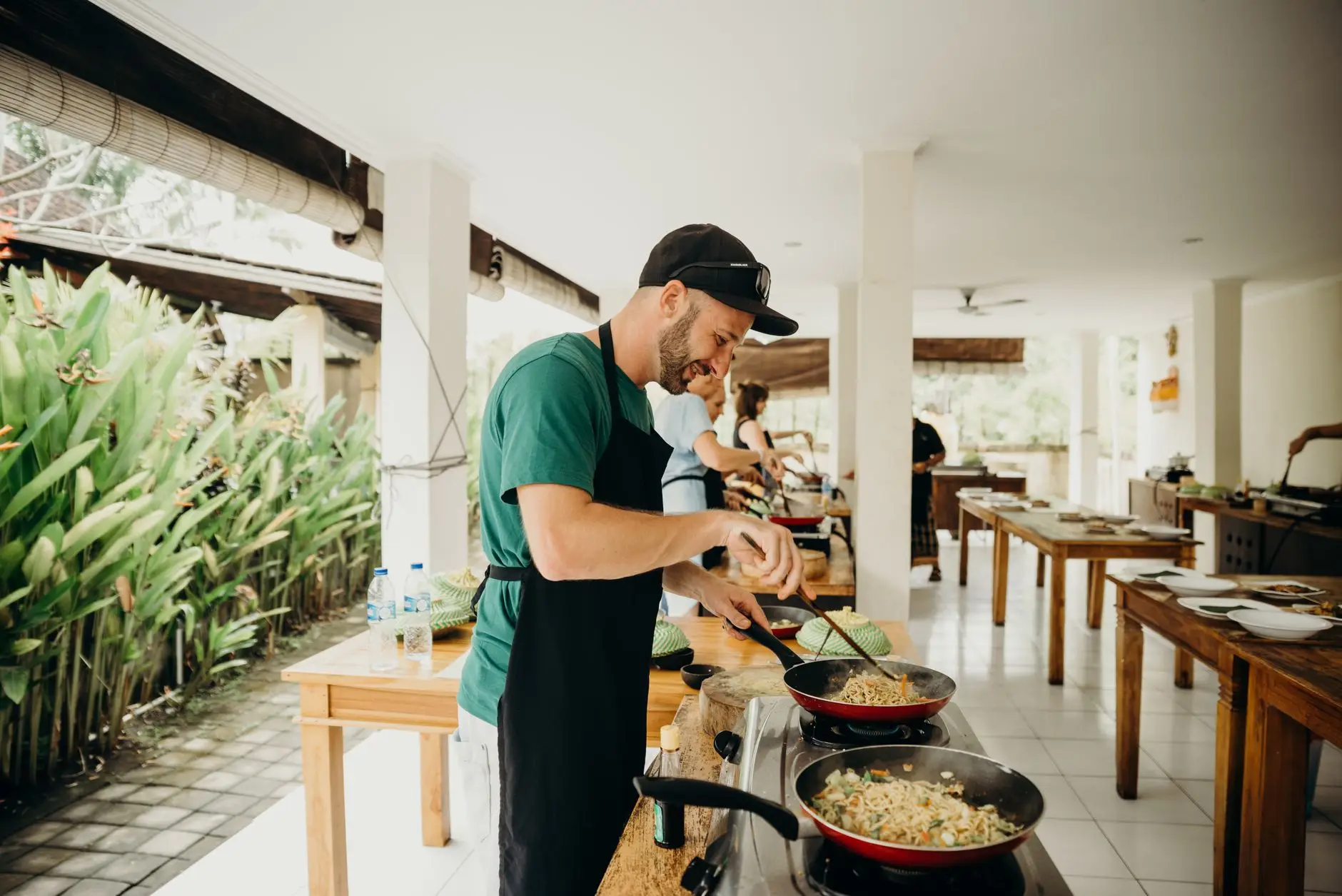
A standard Bali traditional cooking class with market tour typically includes guided market shopping, hands-on cooking instruction, a full meal of prepared dishes, and recipe cards to take home. Most classes transport participants to traditional markets like Ubud Traditional Market or Satria Traditional Market in Denpasar, where instructors demonstrate how to select authentic Balinese ingredients like temu laksa (galangal), kencur (aromatic ginger), and fresh turmeric.
The market tour component varies significantly between providers. Premium classes like those organized through Taman Bacaan Library Community in Ubud include an educational component explaining Balinese agricultural practices and the cultural significance of specific ingredients. These tours usually last 60-90 minutes and follow a predetermined route that accommodates group movement while ensuring vendors are prepared for instructional demonstrations.
Cooking sessions typically last 2-3 hours and involve 3-5 traditional dishes. The Bali Culinary Pastry School in Denpasar includes detailed spice grinding techniques using traditional tools like cobek (stone mortar) and ulekan (stone pestle), which many participants cite as the highlight of their experience. All classes provide cooking stations with necessary equipment, though traditional home-based classes may require participants to share tools, creating a more communal experience.
Meals are typically served midday after cooking completion and feature the dishes prepared during class. The Tegalalang Rice Terrace Cooking School includes a feast of 6-7 dishes that highlight regional variations, while more intimate classes in Canggu often focus specifically on ceremonial dishes like Babi Guling (suckling pig) or Bebek Betutu (slow-roasted duck). Regardless of venue, all meals include steamed rice, fresh fruit, and typically one non-alcoholic beverage like sweet tea or coconut water.
When to Book Bali Traditional Cooking Class With Market Tour: Seasonal Considerations and Price Variations
Booking your Bali traditional cooking class with market tour 2-4 weeks in advance provides the best selection of dates and instructors, though last-minute slots often become available during shoulder seasons. Bali’s culinary tourism operates on distinct seasonal patterns that directly impact availability and pricing, with July-August and December-January commanding premiums of 15-25% over mid-year rates. The Ubud Food Festival typically in June creates a surge in demand for classes featuring regional specialties, with popular venues like Paon Bali Cooking Class often fully booked 6 weeks ahead during this period.
Understanding Bali’s rainy season (November-March) requires pragmatic planning, as outdoor market components may be modified to covered sections of traditional markets like Sukawati Art Market or Bedugul Market. The Seminyak and Canggu cooking schools generally implement weather contingency plans that shift market tours to their indoor ingredient prep areas during heavy downpours, though the experience loses some authenticity when participants cannot interact with actual market vendors. Providers like Satria Cooking Class in Ubud maintain dual pricing structures where dry season rates apply from April through October, while wet season prices include a 10% discount to compensate for reduced outdoor market access.
The Nyepi Day of Silence in March presents unique booking challenges, as many traditional cooking operations completely shut down for 24-48 hours, requiring travelers to plan classes either before or after this Balinese Hindu holiday. Advance reservation becomes particularly critical when requesting specialized dietary accommodations, as home-based cooking operations like those in Tegallalang often source specific ingredients directly from local farmers 2-3 days prior to class dates. The trade-off between booking early versus maintaining flexibility depends on your travel flexibility—those with fixed itineraries should secure reservations 3-4 weeks ahead, while spontaneous travelers may find better deals 3-5 days prior during non-peak periods when providers discount remaining slots.
Additional Information
Cancellation Policies and What to Know Before You Book a Cooking Class With Market Tour
Cancellation policies for Bali traditional cooking classes with market tours vary significantly by provider, with home-based operations typically offering more flexible terms than commercial culinary schools. The Bali Cooking School in Denpasar maintains a strict 72-hour cancellation window, charging 50% of the fee for cancellations made less than three days before class, while smaller operations like Putu’s Kitchen in Ubud often allow cancellations up to 48 hours prior with only a 25% penalty. The price difference reflects operational scale—larger schools commit to ingredient purchases based on confirmed headcounts, whereas home-based chefs can adjust purchasing more fluidly.
Weather-related cancellations represent a critical distinction between providers, with those operating through the Bali Culinary Center in Ubud automatically rescheduling classes to the following day if rain exceeds 25mm during morning market tours. The Ubud Cooking Class implements a more generous policy, offering participants the choice between rescheduling or receiving a full refund when market tours are canceled due to weather, though this flexibility comes with a base price that averages 20% higher than smaller competitors. All reputable providers maintain clear rainy-day contingency plans, but the specifics of these adjustments significantly impact the educational value—some simply move indoors while others substitute demonstrations with pre-recorded market footage.
Payment methods reveal important operational differences between providers, with premium schools like Taman Cooking Class requiring full payment at booking via credit card or PayPal, while traditional home operations often accept cash on arrival with deposits via bank transfer. The deposit structure directly affects cancellation terms—providers requiring full prepayment typically offer less flexibility than those accepting only a 30-50% deposit upfront. Before committing, verify the refund processing timeline, as commercial schools often take 7-14 business days to process refunds while home-based operations may complete transactions within 3-5 days. The most critical consideration for international travelers is understanding the provider’s force majeure policy regarding volcanic activity or other natural disasters, with the Bali Culinary Association recommending venues that explicitly outline procedures for Ash Fall Alerts issued by the Indonesian Center for Volcanology and Geological Hazard Mitigation.
Insider Insights: What Practitioners Know That Most People Don’t
Culinary professionals operating in Bali’s cooking tourism industry understand that the most authentic experiences often occur behind the scenes of carefully marketed tours. Professional cooks from the Bali Culinary School Association reveal that many market tours follow predetermined routes that miss the most vibrant sections of traditional markets like Pasar Senggol in Ubud or Pasar Kereneng in Denpasar, where locals actually shop rather than perform for tourists. These sections open as early as 3 AM when the freshest ingredients arrive, a timing incompatible with most 8 AM market tours designed for tourist convenience.
Seasonal market dynamics significantly impact cooking class quality, yet this remains an unspoken variable for most tourists. The Taman Sari Cooking School in Ubud maintains a detailed calendar tracking seasonal availability of key Balinese ingredients. During the rainy season (November-March), wild ginger (kencur) becomes scarce, forcing many schools to substitute with lesser-quality alternatives or skip traditional recipes altogether. Conversely, the dry season (April-October) brings an abundance of tropical fruits that rarely appear on standard class menus but offer exceptional value for those who request seasonal adaptations.
Read Also: Nusa Lembongan Private Tour Package Booking Process and What to Expect
Behind the scenes, cooking class operations reveal critical quality control differences between providers. Casa Luna Cooking School in Ubud maintains its own herb garden specifically for cooking classes, ensuring consistent availability of fresh turmeric, lemongrass, and torch ginger flowers—ingredients commonly substituted with inferior alternatives by budget operators. The school’s purchasing director notes that market tours for educational purposes require 30-40% more preparation time than commercial tours to identify authentic vendors and negotiate fair pricing, a detail rarely reflected in tour descriptions.
Cultural protocol misunderstandings frequently diminish the educational value of market tours. Balinese market etiquette follows strict unwritten rules: pointing with fingers is considered rude, bargaining follows specific protocols, and certain ingredients require special handling. The Ubud Culinary Institute provides instructors with a “Market Etiquette Handbook” containing these protocols, yet few commercial operators invest in this level of cultural preparation. The consequence? Tourists often offend vendors unintentionally, limiting access to authentic ingredients and vendor demonstrations.
Operational logistics reveal significant disparities between cooking class providers that affect learning outcomes. The Bumbu Bali Cooking School conducts all market tours in small groups of maximum 8 participants to ensure hands-on participation with ingredient selection, while larger operators frequently manage groups of 15-20 where most participants observe rather than participate. The school’s founder notes that ingredient identification becomes nearly impossible in larger groups, diminishing the market tour’s educational value despite appearing comprehensive on paper.
Behind-the-scenes kitchen maintenance practices directly impact the learning experience. Professional kitchens like those at the Bali Paon Cooking School implement a “mise en place” preparation system where ingredients are pre-portioned and organized before each class begins—a practice rarely mentioned in promotional materials but essential for effective instruction in Balinese cooking techniques where precise ingredient ratios define authentic flavors. The school’s operations manager estimates that proper preparation increases ingredient costs by 15-20% but enables more authentic recipe replication by students.
Perhaps most revealing is the tiered ingredient sourcing system that distinguishes professional operations from casual classes. The Pomegranate Cooking School in Ubud operates a three-tiered supplier system: premium ingredients from organic farms in Bedugul, standard market purchases for everyday items, and specialty items from heritage growers in Jembrana. This multi-source approach allows the school to maintain consistent quality while accommodating seasonal availability—a logistical complexity invisible to tourists but essential for culinary authenticity. The school’s director notes that this approach increases operational costs by approximately 25% compared to single-source providers but results in a 40% higher student satisfaction rate based on post-class surveys.